报告人:钱煜奇(香港大学 副研究员)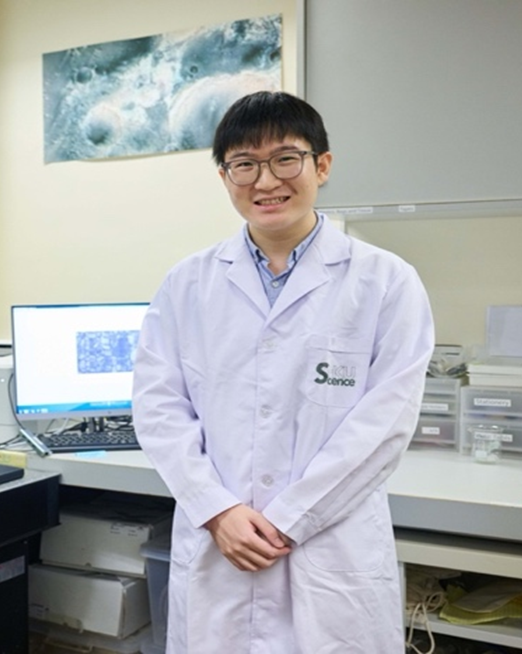
时间:2026年1月4日(周日) 10:00-11:30
地点:测绘馆206报告厅
报告简介:
Originating from a catastrophic impact, the Moon was initially molten and cooled down over time. Lunar volcanism links the interior and exterior of the Moon, whose eruption transported these hot magmas from depth to the surface. As the Moon cooled, volcanic activities gradually declined, but the exact timing of its cessation remains unresolved due to the lack of young volcanic rocks until the Chang’e-5 and Chang’e-6 missions. Recent samples from Chang’e-5 and Chang’e-6, dated to erupt at ~2.0 and ~2.8 billion years ago, represent the youngest and second-youngest lunar volcanic products collected so far. Chang’e-5 and Chang’e-6 missions landed on the Northern Oceanus Procellarum, northwest of Procellarum KREEP Terrane and Southern Apollo basin, northeast of South Pole-Aitken basin. Both of them develop prolonged volcanism from the Pre-Nectarian to the Copernican Period, probably extended by their thin crust and enriched heat-producing element composition. However, located on lunar nearside and farside, respectively, volcanic activities in these two regions show remarkable differences. This talk will summarize the geological setting of Chang’e-5 and Chang’e-6 lunar samples from a local and global scale, aiming to localize the fundamental scientific questions that could be answered by these two historic lunar missions.
报告人简介:
Dr. Yuqi Qian is a Research Assistant Professor from the Department of Earth and Planetary Sciences at the University of Hong Kong. He holds a doctoral degree in Planetary Geology and Comparative Planetology from the China University of Geosciences (Wuhan) and has dedicated his studies to unravel the secrets of the Moon behind modern remote sensing approaches and returned lunar samples. Dr. Qian’s research mainly focuses on geological processes on terrestrial planets, with a special focus on China’s Lunar Exploration Program, including Chang’e-5, Chang’e-6, and Chang’e-7 missions. He is a scientific committee member of the Science and Application System of China’s Human Lunar Exploration Program. He has published more than 50 papers with over 1500 citations, including those in top-tier Nature Index journals. His works on the Chang’e-5 and Chang’e-6 lunar landing sites have significantly helped the sample analyses of the returned lunar samples and maximized the scientific outcome of these two missions.
