报告人:Jeffrey Walker(澳大利亚莫纳什大学 教授)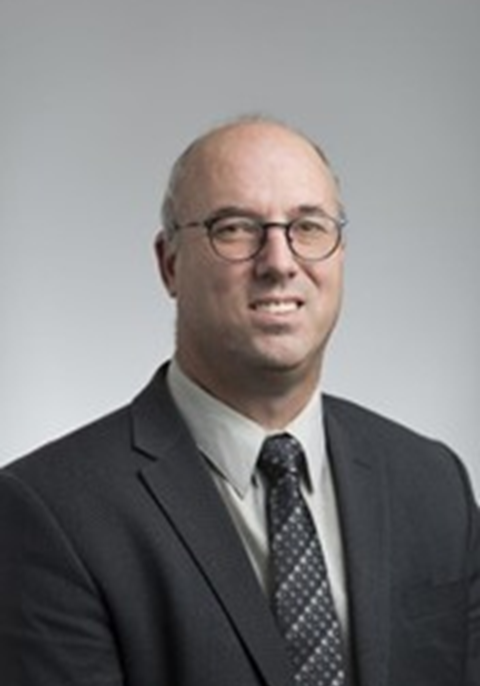
时间:2026年1月12日(周一) 10:30-12:00
地点:测绘馆206报告厅
报告简介:
Effective natural disaster management relies on accurate risk prediction and real-time monitoring. This demands high-resolution, real-time data on soil and fuel moisture, flood inundation, and fire front dynamics—capabilities that current satellite systems are unable to fully deliver due to limitations such as cloud cover, coarse spatial resolution, and long revisit intervals.
To address these challenges, a new near-space observation concept is being developed using high-altitude platforms (HAPs). Operating at approximately 20 kilometers above the Earth, HAPs can carry passive microwave sensors at L- and Ka-band, enabling continuous monitoring at spatial resolutions up to two orders of magnitude finer than those achievable by current satellite systems. This presentation will introduce an end-to-end feasibility study currently underway, covering sensor design, data processing, and algorithm development for this promising solution.
报告人简介:
Jeffrey Walker is an Australian Research Council (ARC) Laureate Professor in the Department of Civil and Environmental Engineering at Monash University and the General Chair of IGARSS 2025. He is an IEEE Fellow, a Fellow of the Institution of Engineers Australia, and a Fellow of the Modelling and Simulation Society of Australia and New Zealand.
His research focuses on soil moisture remote sensing, data assimilation, and earth system modelling. He has served as a Science Definition Team member for NASA’s SMAP mission and a Cal/Val Team member for ESA’s SMOS mission. He leads the development of Australia's most comprehensive airborne remote sensing capabilities and the OzNet hydrological monitoring network. With over 300 publications and more than 30,000 citations (H-index: 85), his work aims to revolutionize environmental monitoring through the convergence of sensing technology and model predictions.
