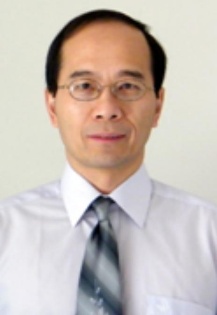
 报告人:王勇(电子科技大学 教授)
时间:2026年11月9日(周一) 14:00-15:30
地点:测绘馆206报告厅
报告简介:
Polarimetric synthetic aperture radar (PolSAR) decomposition, through both model- and eigen-based approaches, is central to urban scattering analysis. The evolving complexity of these algorithms alongside emerging SAR technologies calls for a reassessment of current capabilities, enduring challenges, and future research priorities. While model-based methods excel in physical interpretability, their reliance on assumptions like azimuthal symmetry and fixed geometries constrains polarimetric information use and often inflates volume scattering. Attempts to increase model flexibility through additional parameters come at the cost of computational efficiency and stability. Eigen-based methods offer advantages in information utilization and energy conservation but suffer from a lack of physically meaningful eigenvalues and eigenvectors. The common practice of mapping decomposition results to scattering mechanisms via fixed eigen- components or empirical thresholds remains a fundamental weakness. A comparative analysis using multi-band (C-, L-, P- band) airborne and spaceborne PolSAR data identifies persistent limitations: insufficient noise resilience, energy non- conservation, and confusion between oriented urban areas and forests in volume scattering estimates. Crucially, system parameters (e.g., incidence angle, wavelength) significantly influence decomposition outputs, often dominating the observed scattering characteristics. For high-resolution urban applications, adopting a 4×4 covariance or coherency matrix is crucial to account for SHV and SVH inequality, enabling more precise scattering mechanism delineation. Furthermore, reducing the sensitivity to incidence angle and wavelength is essential for achieving consistent double- bounce and volume scattering estimates. These results advocate for a shift toward hybrid, system-aware decomposition frameworks that synergistically combine the strengths of model and eigen-based approaches, prioritizing both physical interpretability and robust, platform-independent scattering characterization.
报告人简介:
Yong Wang obtained his bachelor’s degree from Northwestern Polytechnical University in Xi’an,China, in 1982, and his Ph.D. from the University of California, Santa Barbara, California, USA, in 1992. Wang is currently a professor at the University of Electronic Science and Technology of China. His research focuses on synthetic aperture radar (SAR) imaging mechanisms and algorithms; information processing and applications of SAR and interferometric synthetic aperture radar (InSAR); microwave remote sensing modeling for forest applications and land surface parameter inversion; and cloud detection and removal in optical remote sensing data.
He has published nearly 230 papers in top-tier journals and academic conferences in the field of remote sensing and earth sciences. He has been featured in the annual “Career-long Impact” list of the World’s Top 2% Scientists published by Elsevier for the years 2020-2026.
He currently serves as Co-Editor-in-Chief of the Journal of Electronic Science and Technology (JEST) and Associate Editor for Remote Sensing of Environment (RSE).
